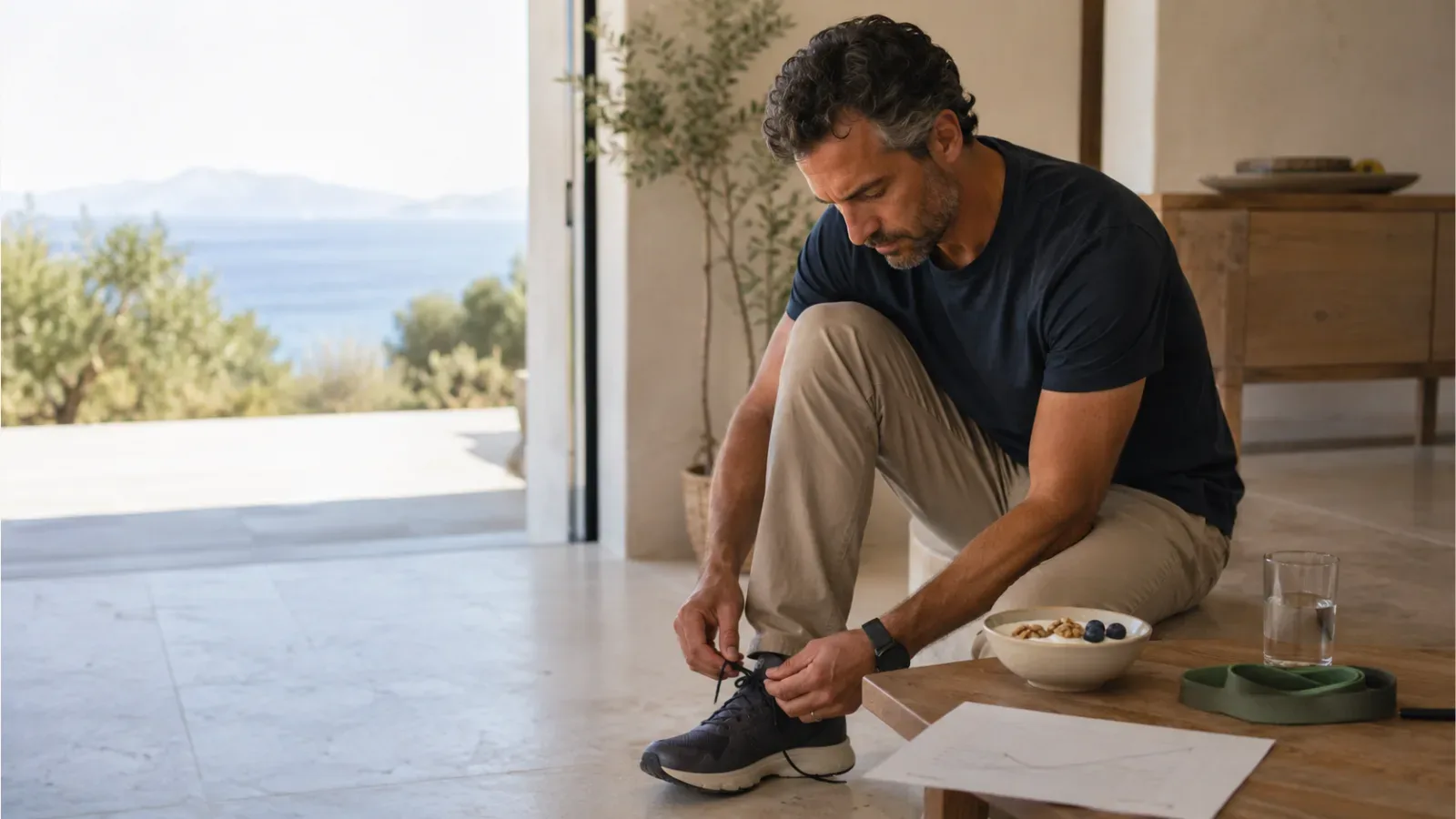
A good longevity programme is not a ready-made package that gives everyone the same tests and supplements. It considers a person’s future health risks, current physiological capacity, living circumstances and goals together, creates a practical plan and continually updates it in response to results.
Personalisation therefore does not simply mean collecting more data. Its real value lies in selecting the right information, setting priorities and translating them into measurable health gains.
In brief:
How is a personalised longevity programme designed?
First, the person’s goals and medical history are understood; the assessment does not focus only on laboratory results.
Future disease risks and current capacity are measured separately. Fitness or muscle strength may be inadequate even when risk appears low.
Not every test is appropriate for everyone. Basic assessments are considered for everyone; advanced tests are added only when they will answer a specific question.
Lifestyle and evidence-based medical care form the foundation of the programme. Supplements, advanced biomarkers and new treatments are added to that foundation when needed.
Success is not measured only by weight or biological age. Risk factors, VO₂max, muscle strength, body composition, sleep, everyday function and sustainability are monitored together.
How Is a Personalised Longevity Programme Designed?
What is a longevity programme?
A longevity programme is a medical roadmap aimed not simply at living longer, but at extending the time spent free of disease, independent, mentally alert and physically strong throughout life.
A conventional health check often answers the question “Is there an evident disease today?” The longevity approach adds three more questions:
Which diseases am I at risk of developing in the future?
What is my current level of physical and mental capacity?
Which area, if improved now, would give me the greatest long-term health benefit?
The aim of this approach is not to achieve perfect laboratory values, but to increase the long-term resilience of the cardiovascular, metabolic, musculoskeletal, brain and immune systems.
Why should a personalised longevity programme differ from person to person?
Two people of the same age and weight may have entirely different health priorities. One may have a family history of premature heart disease and high ApoB, while insulin resistance, visceral fat accumulation or accelerated bone loss associated with menopause may matter more for the other. Someone else may have apparently normal laboratory results but markedly low VO₂max, muscle strength or sleep quality.
The main factors shaping personalisation include:
Age and biological sex
Family history and genetic predisposition
Existing conditions and current medications
Body composition and fat distribution
Fitness, strength, balance and mobility
Nutrition, sleep, stress, smoking and alcohol use
Work patterns, travel, caring responsibilities and social surroundings
Menopause, hormonal status and life stage
The person’s values, goals and readiness for change
A scientifically sound plan that cannot be put into practice in the person’s everyday life is not truly personalised.
What are the stages of a personalised longevity programme?
I approach a personalised programme as a five-stage cycle:
Risk → Capacity → Priorities → Implementation → Reassessment
Instead of a report prepared once and left on a shelf, this cycle creates a living health system that is continually updated.
You can explore how this cycle translates into individual assessment and follow-up on the personalised assessment and follow-up in Bodrum page.
1. How are health goals and a detailed medical history assessed?
The first step is to understand the person, not to order tests. The initial consultation considers:
Past illnesses, operations and current symptoms
Family history of premature heart disease, stroke, diabetes, cancer, osteoporosis or dementia
Current medicines, supplements and possible interactions
Weight changes, eating patterns and eating behaviour
Everyday movement, exercise history and injuries
Sleep duration, snoring, night-time awakenings and daytime energy
Stress levels, psychological wellbeing and social connections
Menstrual patterns, perimenopause and menopausal symptoms in women
The outcomes the person wants to achieve
“I want to be healthier” is an important but broad goal. It needs to be translated into specific aims, such as climbing stairs without breathlessness, losing weight without losing muscle, controlling blood pressure, preserving cognitive health or remaining independent in one’s 70s.
If you live in Istanbul and are planning to travel to Bodrum for a consultation, you can read the pre-visit preparation and follow-up guide.
2. How are future health risks identified?
Risk assessment does more than list existing conditions; it attempts to make probabilities visible before disease develops.
Cardiovascular and metabolic risk
Blood pressure, smoking, lipids, glucose metabolism, kidney function, waist circumference and family history are considered together. Where appropriate, 10- and 30-year risk estimates can be calculated. Current models such as PREVENT attempt to account for heart failure and the kidney–metabolism relationship alongside atherosclerotic cardiovascular disease. However, no calculator replaces clinical assessment, and its accuracy may differ outside the population in which it is used.
When necessary, additional measurements such as ApoB, lipoprotein(a), coronary artery calcium scoring or vascular imaging can clarify risk classification. They do not need to be used routinely in everyone.
Cancer risk
Cancer screening is planned according to age, biological sex, family history, smoking, occupational exposures and previous findings. Methods such as colonoscopy, mammography, cervical screening or low-dose lung CT are used for the right person at the right time.
Broad tumour-marker panels or indiscriminate “whole-body screening” do not always benefit an asymptomatic healthy person; false-positive results can lead to unnecessary anxiety and procedures.
Brain, bone and frailty risk
Cognitive symptoms, a family history of dementia, hearing loss, hypertension, sleep apnoea and metabolic risks are assessed in relation to brain health. Menopause, low body weight, steroid use, previous fractures and family history matter for bone health. As people age, fall risk, balance and mobility are also included in the assessment.
3. How are current health and performance capacity measured?
Risk describes the probability of a future event. Capacity shows how strong, resilient and functional a person is today. A good longevity programme does not confuse these two areas.
Basic clinical and laboratory assessment
Selected according to the person’s history, the assessment may include:
Blood pressure, pulse and home measurements when needed
Complete blood count
Fasting glucose and HbA1c
Lipid profile; ApoB and lipoprotein(a) where appropriate
Kidney and liver function
Thyroid assessment
Iron, B12, folate and vitamin D when clinically indicated
Urinalysis and the albumin-to-creatinine ratio
Insulin, hormones, inflammatory markers or more detailed metabolic tests should be selected according to the clinical question, not automatically ordered for everyone.
Body composition
The scales alone are not enough. Of two people who weigh the same, one may have more muscle and less visceral fat. Waist circumference is a basic indicator. In suitable individuals, DEXA can assess:
Fat mass,
Lean tissue and muscle distribution,
Visceral fat,
Bone mineral density
together. Particularly in weight-loss programmes, the aim is not merely to lose weight but to lose fat while preserving muscle.
VO₂max and cardiorespiratory capacity
VO₂max reflects the combined capacity of the heart, lungs, circulation and muscles to use oxygen. Cardiorespiratory fitness is strongly associated with long-term health outcomes and has been recognised by the American Heart Association as a clinical vital sign.
Direct measurement through laboratory cardiopulmonary exercise testing provides the most detailed information. If this is not possible, suitable field tests can provide estimates. The result should not simply be labelled “good” or “bad”; it should be translated into a safe, individually appropriate aerobic training plan.
Muscle strength, balance and mobility
Muscle mass matters, but strength and function are at least as valuable. Grip strength, chair stands, walking speed, balance and, where appropriate, movement quality can be assessed.
A strength programme should be designed around age, training history, joint problems and goals. General evidence-based recommendations provide a starting framework, but a sedentary adult and an experienced athlete cannot have the same exercise prescription.
Sleep and recovery
Sleep assessment is not limited to asking “How many hours do you sleep?” Alongside duration, it considers:
Falling asleep and staying asleep,
Regularity of sleep timing,
Snoring and pauses in breathing,
Waking feeling rested,
Daytime sleepiness,
Shift work, travel and light exposure
as well. A sleep study is arranged when needed. Wearable devices can show trends but cannot diagnose a sleep disorder on their own.
Brain and cognitive capacity
Not everyone needs a brain MRI or a comprehensive battery of cognitive tests. Depending on age, symptoms, family history and risks, attention, memory, executive function, mood, hearing and sleep can be considered together. If testing is repeated, learning effects and the reliability of the test need to be taken into account.
Which advanced tests are genuinely meaningful in a longevity programme?
An advanced test is valuable only if its result will change a decision. Depending on the individual, the following tools may be added:
Epigenetic biological age and pace-of-ageing tests
Organ or system ages
Genetic risk tests and pharmacogenetic assessment
Continuous glucose monitoring
Advanced lipid and cardiometabolic markers
Coronary calcium scoring or targeted imaging
DEXA body composition and bone density assessment
Cardiopulmonary exercise testing
Sleep studies
Microbiota or omic analyses directed at a clinical question
The fundamental question should not be “Can we perform this test?” but “What will the result change?”. Ordering an advanced test when it will not change the plan is not personalisation; it is data overload.
How is biological age testing incorporated into a personalised programme?
Epigenetic clocks and other biological age measurements may help assess an ageing pattern that chronological age does not reveal. OMICmAge aims to show the multiple biological signals associated with overall biological age and health risk, DunedinPACE the pace of ageing, and SYMPHONYAge the distribution of ageing across physiological systems.
These data are particularly valuable in three areas:
Building a broader baseline ageing profile,
Providing clues about which systems require more detailed assessment,
Showing the direction of change over time in follow-up using the same method.
A biological age test does not provide a diagnosis and is not the programme’s sole measure of success. It should be interpreted alongside blood pressure, metabolic control, VO₂max, muscle strength, body composition, sleep and everyday function.
How are priorities set in a personalised longevity plan?
An assessment may identify many areas for improvement. Trying to intervene in all of them at once makes the programme complicated and unsustainable.
Four questions guide the order of priorities:
How serious are the potential consequences of the risk?
How modifiable is the risk?
How strong are the evidence and safety of the intervention?
How likely is the person to be able to implement it?
For example, trying to “optimise” a rare biomarker before addressing uncontrolled hypertension, high ApoB or smoking is not sound prioritisation. Similarly, a plan consisting only of supplements and exercise is not sufficient for someone with severe sleep apnoea.
For most people, selecting two or three main goals at the outset is more effective. Other areas can be incorporated into the follow-up cycle.
What are the core components of a longevity programme?
Although the programme varies from person to person, a strong plan usually rests on the following areas:
Nutrition
No single “longevity diet” suits everyone. The plan is shaped by metabolic health, muscle mass, kidney function, intolerances, cultural preferences and goals. A Mediterranean-style eating pattern emphasising vegetables, legumes, good-quality protein, fibre, olive oil, nuts and minimally processed foods provides a strong general starting point.
When weight loss is the goal, adequate protein, resistance exercise and a strategy to prevent muscle loss matter as much as the energy deficit.
Aerobic exercise and everyday movement
As a general health framework, the World Health Organization recommends 150–300 minutes of moderate-intensity or 75–150 minutes of vigorous-intensity aerobic activity per week for adults, plus muscle-strengthening activity on at least two days per week. In a personalised programme, duration and intensity are adjusted to the starting level, safety, VO₂max and goals.
Strength, muscle and bone health
Resistance exercise not only preserves muscle mass and strength; it also supports blood pressure, glucose control and body composition. The programme should include major muscle groups, progressive loading, sufficient recovery and balance work when needed.
Sleep and circadian rhythm
Sleep duration, continuity, timing, regularity and the absence of sleep disorders are considered together. For someone with snoring or daytime sleepiness, an assessment for sleep apnoea may be needed rather than simply advising an earlier bedtime.
Stress, mental health and social connections
Sustainable health involves more than biochemistry and exercise. Chronic stress, depression, loneliness and workload affect sleep, eating behaviour, movement and treatment adherence. The programme should not overlook the person’s psychological burden or social support.
Preventive medicine and disease management
Vaccinations, age- and risk-appropriate cancer screening, oral and dental health, and vision and hearing assessments are part of the programme. Evidence-based treatment is not delayed when hypertension, diabetes, dyslipidaemia or osteoporosis is present. Longevity is not an alternative to conventional medicine; it is an earlier and more integrated application of it.
Are supplements essential in a longevity programme?
No. A longevity programme can be designed without supplements. They should be considered when there is a documented deficiency, a specific clinical goal or a credible expectation of benefit.
Supplement selection considers:
The level of evidence and intended outcome
Appropriate dose and duration of use
Kidney and liver function
Interactions with medicines and other supplements
Product purity and quality control
Which follow-up measurement will be used to assess benefit
Starting many products simultaneously makes it harder to identify which one produces a benefit or an adverse effect. Being “natural” does not automatically make a product effective or risk-free.
When are new and regenerative interventions added to the programme?
Regenerative or innovative interventions should not be the starting point. The foundation of diagnosis, risk control, nutrition, exercise, sleep and standard treatments should be established first.
If an intervention is being considered:
It should have a clear objective,
Its level of evidence from human studies should be known,
Safety and uncertainties should be discussed,
It should comply with regulations and ethical principles,
It should not replace standard treatment,
Its effects and adverse effects should be monitored against predetermined criteria.
Being personalised does not mean using a weakly supported method simply because it is new.
How long does a longevity programme last?
Longevity is not a short course of treatment but long-term health management. Nevertheless, its initial phase can be structured:
The first 2–4 weeks: Assessment, measurements and setting priorities
The first 8–12 weeks: Establishing foundational habits and observing the early clinical response
3–6 months: Reassessing metabolic, physical and behavioural goals
6–12 months: Comparing body composition, fitness and appropriate biomarkers
An annual cycle: Updating risks, screening, goals and the programme
These intervals are not a fixed protocol. Conditions such as uncontrolled hypertension, starting a new medication or active weight loss may require closer monitoring, while a stable person may need less frequent follow-up.
How can you tell whether a longevity programme is working?
Success should not be reduced to a single number. A personalised dashboard of indicators can be used:
Area | Examples of outcomes to monitor |
|---|---|
Cardiovascular risk | Blood pressure, ApoB/non-HDL cholesterol, smoking status, risk score |
Metabolic health | Waist circumference, HbA1c, fasting glucose, visceral fat |
Physical capacity | VO₂max, exercise tolerance, resting heart rate |
Muscle and bone | Muscle mass, grip strength, basic strength measurements, bone density |
Sleep and recovery | Sleep duration and regularity, daytime energy and sleep-study results when needed |
Brain and function | Cognitive symptoms, work performance, balance and everyday capacity |
The biology of ageing | The direction of change over time in biological age, pace of ageing and system ages |
Sustainability | Adherence, quality of life and the person’s ability to maintain the plan |
Just as a value within the laboratory reference range is not always “optimal”, a small change does not necessarily represent clinical success. The predetermined goal, measurement error and the person’s overall health need to be considered together.
What are the most common mistakes in a personalised longevity programme?
Using the same test package for everyone
Personalisation is not putting a person’s name on a standard panel. Test selection must be connected to their history, risk and the clinical question.
Treating normal laboratory results as complete health
Routine laboratory tests matter, but they do not, on their own, describe fitness, muscle strength, sleep, cognitive capacity or every long-term risk.
Changing too many things at once
Starting a strict diet, intensive exercise, a long supplement list and a complicated sleep protocol all at once can reduce adherence. A prioritised, gradual plan is more sustainable.
Measuring without following up
A one-off check-up is like a photograph; it does not show the course of change. A longevity programme should monitor direction over time, like a film recorded at defined intervals.
Making the biomarker more important than the person
A reduction in biological age may be valuable, but a programme is not successful if the person is losing strength, sleeping poorly or experiencing a lower quality of life because of the plan.
What is the difference between a longevity check-up and a longevity programme?
A longevity check-up measures the starting point and risks. A longevity programme translates these data into goals, practical interventions and a follow-up plan.
In other words:
A check-up shows where you are.
A programme determines where you are going and how you will measure progress.
A good set of measurements has limited value without sound interpretation and follow-up. The programme’s real strength is the connection between measurement, behaviour and medical decisions.
Who is a personalised longevity programme suitable for?
The programme is not only for older people or those who are ill. It may be particularly meaningful for:
People with a family history of premature heart disease, diabetes, cancer or dementia
People experiencing metabolic risk, weight gain or muscle loss
Women in perimenopause or menopause
People who notice declining energy, sleep or physical performance
People who appear healthy but want a more detailed assessment of their long-term risks and capacity
People aiming to preserve muscle and performance while losing weight
People who want to manage their health through measurements over the years
The scope varies by individual. Basic risks and habits may take priority for a young, healthy adult, whereas someone with chronic disease or a significant family history requires a more detailed medical assessment.
Conclusion: personalisation means better priorities, not more procedures
A personalised longevity programme is a dynamic process that identifies future risks, measures current capacity, prioritises the most important problems and turns them into a practical health plan.
The quality of a programme is not measured by the number of tests performed or supplements used. It is measured by choosing the right measurement for the right person, relying on strong evidence, fitting into everyday life and updating itself through reassessment of outcomes.
The aim is not to look “younger” on a report, but to live through the years with a lower risk of disease, a stronger body and greater mental and physical capacity.
Medical note: This content is for general information and does not replace individual diagnosis or treatment advice. Tests and interventions should be planned by a physician according to the person’s medical history, examination and risks.
References
Lloyd-Jones DM, Allen NB, Anderson CAM, et al. Life’s Essential 8: Updating and Enhancing the American Heart Association’s Construct of Cardiovascular Health. Circulation. 2022;146–e43. doi:10.1161/CIR.0000000000001078
Khan SS, Matsushita K, Sang Y, et al. Development and Validation of the American Heart Association’s PREVENT Equations. Circulation. 2024;149:430–449. doi:10.1161/CIRCULATIONAHA.123.067626
Ross R, Blair SN, Arena R, et al. Importance of Assessing Cardiorespiratory Fitness in Clinical Practice: A Case for Fitness as a Clinical Vital Sign. Circulation. 2016;134–e699. doi:10.1161/CIR.0000000000000461
Paluch AE, Boyer WR, Franklin BA, et al. Resistance Exercise Training in Individuals With and Without Cardiovascular Disease: 2023 Update. Circulation. 2024;149–e231. doi:10.1161/CIR.0000000000001189
Bull FC, Al-Ansari SS, Biddle S, et al. World Health Organization 2020 Guidelines on Physical Activity and Sedentary Behaviour. British Journal of Sports Medicine. 2020;54:1451–1462. doi:10.1136/bjsports-2020-102955
St-Onge MP, Aggarwal B, Fernandez-Mendoza J, et al. Multidimensional Sleep Health: Definitions and Implications for Cardiometabolic Health. Circulation: Cardiovascular Quality and Outcomes. 2025;18. doi:10.1161/HCQ.0000000000000139
Moqri M, Herzog C, Poganik JR, et al. Biomarkers of Aging for the Identification and Evaluation of Longevity Interventions. Cell. 2023;186:3758–3775. doi:10.1016/j.cell.2023.08.003
Moqri M, Herzog C, Poganik JR, et al. Validation of Biomarkers of Aging. Nature Medicine. 2024;30:360–372. doi:10.1038/s41591-023-02784-9
López-Otín C, Blasco MA, Partridge L, Serrano M, Kroemer G. Hallmarks of Aging: An Expanding Universe. Cell. 2023;186:243–278. doi:10.1016/j.cell.2022.11.001
World Health Organization. Integrated Care for Older People: Guidelines on Community-Level Interventions to Manage Declines in Intrinsic Capacity. Geneva: WHO; 2017. WHO publication page
Chen Q, Dwaraka VB, Carreras-Gallo N, et al. OMICmAge Quantifies Biological Age by Integrating Multi-Omics With Electronic Medical Records. Nature Aging. 2026;6:722–737. doi:10.1038/s43587-026-01073-7
Belsky DW, Caspi A, Corcoran DL, et al. DunedinPACE, a DNA Methylation Biomarker of the Pace of Aging. eLife. 2022;11. doi:10.7554/eLife.73420
Sehgal R, Markov Y, Qin C, et al. Systems Age: a Single Blood Methylation Test to Quantify Aging Heterogeneity Across 11 Physiological Systems. Nature Aging. 2025;5:1880–1896. doi:10.1038/s43587-025-00958-3